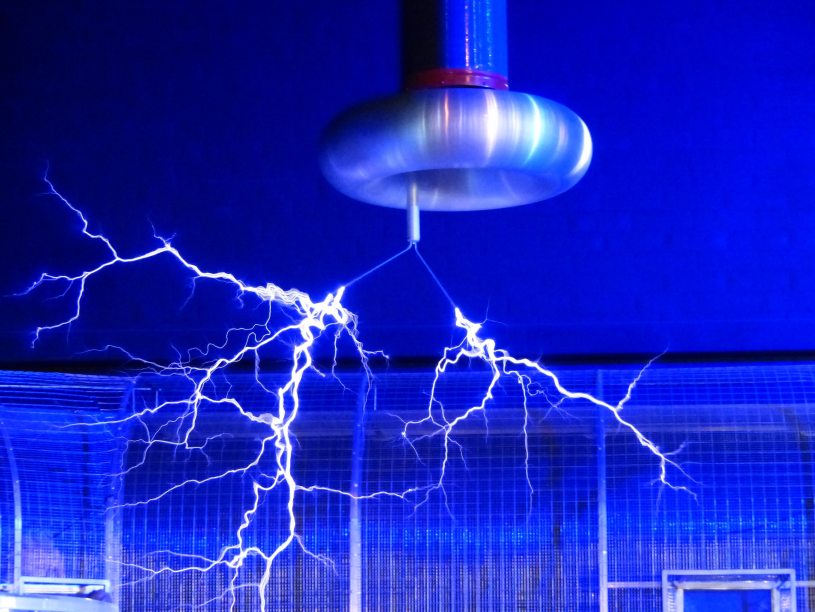
Electricity is a set of phenomena produced by the movement and interaction between positive and negative electrical charges on physical bodies.
The word “electricity” comes from the Latin electrum, and in turn from the Greek elektron , or amber. The reference to amber comes from a discovery recorded by the French scientist Charles François de Cisternay du Fay, who identified the existence of two types of electrical charges (positive and negative). The positive charges were manifested by rubbing the glass, and the negative ones by rubbing resinous substances such as amber.
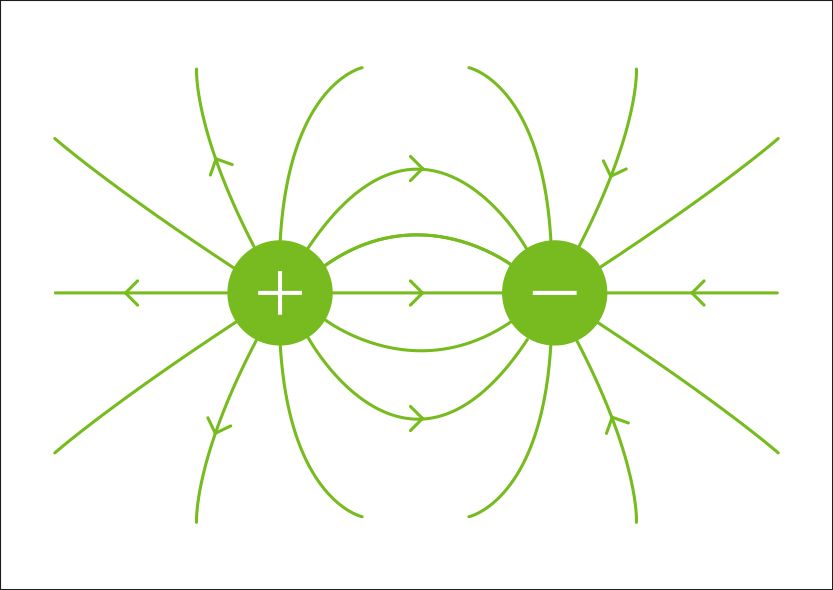
The energy produced by electric charges can manifest itself in four areas: physical, light, mechanical and thermal .
Although electricity is abstract or “invisible” in most of its manifestations, such as in the human nervous system, it is sometimes possible to “see” it, such as lightning when a strong storm develops.
Electricity is a secondary energy source
They are called primary energies which are obtained directly from nature: solar, hydro, wind, geothermal, biomass, oil, natural gas or coal.
The secondary energies come from the transformation of primary energy destined for direct consumption or other uses gasoline, electricity, diesel, fuel oil …
How is electricity produced for consumption?
Electricity is produced by electrical systems that guarantee its availability.
An electrical system is the set of elements that operate in a coordinated manner in a given territory to satisfy consumers’ demand for electrical energy.
Electrical systems can be basically classified as follows:
- Generation centers or plants where electricity is produced (nuclear, hydroelectric, combined cycle power plants, wind farms, etc.).
- High voltage electric power (AT) transmission lines.
- Transformer stations (substations) that reduce the line voltage or voltage (high voltage / medium voltage, medium voltage / low voltage).
- Medium and low voltage distribution lines that carry electricity to the points of consumption.
- Electrical control center from which the energy generation and transportation system is managed and operates.
Uses and applications of electricity
Electricity is an essential energy source . In any home there are all kinds of appliances and appliances that work with electric current, in addition to the lighting system.
In industry, almost half of the energy consumed is electrical. Electricity is used both as a driving source for the electric motors of the machines and devices in each sector, and to heat the contents of tanks, tanks and boilers. As in the domestic sector, electricity is also the main source of lighting , and allows for obtaining hot and cold with air conditioning equipment.
In the field of transport , the tram, metro or train are the means of electric transport par excellence. Currently, electric vehicles are mainly being designed for urban uses, as well as so-called “hybrid” vehicles in which the electric motor is combined with an explosion motor, so that it benefits from the advantages of both energy sources. With a simple electrical outlet, the battery can be recharged.
 Xfinity Tech Blog