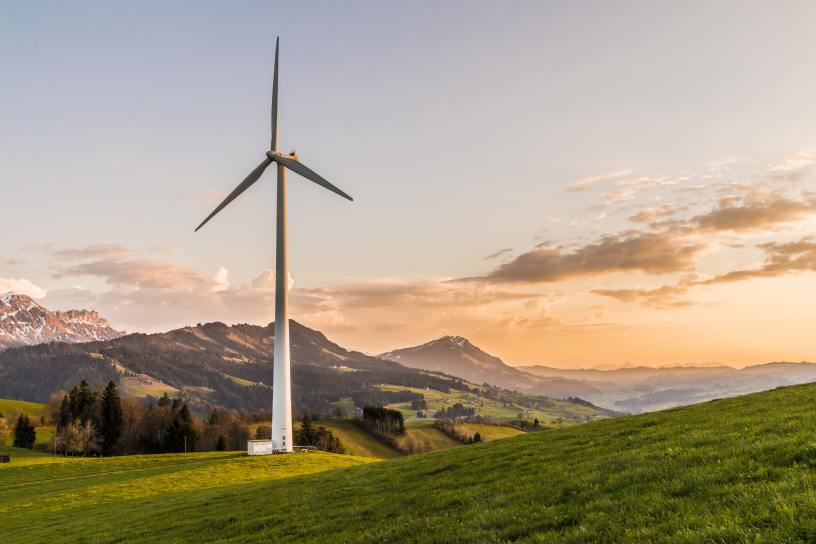
Wind power is available indefinitely and is one of the renewable energies. But what is wind power anyway? How is wind generated? How did our ancestors use the power of the wind for themselves? And what are the advantages and disadvantages of wind energy?
What is wind energy? A definition.
We refer to wind energy as the energy obtained from wind turbines. These systems perform well from a wind speed of 4 to 5 meters per second.
We distinguish between onshore and offshore wind farms. We build onshore wind farms on the coast and inland – for example in the Hanover region. Offshore wind farms generate their electricity at sea, at a great distance from the coast. They pass the electricity on to distribution stations via underground cables. From there it reaches our households.
How we generate electricity from wind energy
Regardless of the location, wind turbines always work the same way: they use the natural power of the wind to generate electrical energy.
It works as follows: First, the kinetic energy of the wind or the air currents sets the rotor blades of the wind turbine in motion and drives the power generator via an axis of rotation. This is how we convert kinetic energy (kinetic energy) into electrical energy – i.e. electricity.
The history of wind energy
Wind power and the birth of seafaring nations Windmills in Europe Windmills do mechanical work Wind power in Germany Development of wind power use
Advantages and disadvantages of wind energy
The advantages of wind energy are obvious: it is unlimited, freely available and environmentally friendly. We are also doing our bit to combat climate change by promoting wind power as a renewable energy.
So wind energy has many advantages. We would also like to deal with any negative effects. For example, we investigate whether wind turbines have disadvantages for residents. Get a compact overview of the advantages and disadvantages of wind energy:
Advantages of wind energy
- We have unlimited wind. Electricity generation from wind energy is very low in pollutants.
- The wind energy industry is growing steadily and creates or secures many jobs.
- Wind power sustainably reduces the emission of carbon dioxide (CO 2) .
- Wind turbines have a positive energy balance: wind turbines generate significantly more energy than the production, logistics, construction and maintenance of the wind turbines as a whole require.
- Electricity from wind power is cheaper than electricity from conventional generation: The costs for dismantling and disposal are much higher for conventional generation plants, such as nuclear power plants, than for wind turbines.
- The use of wind energy poses no elementary dangers for people and nature, such as nuclear energy or petroleum.
- Wind energy makes a contribution to achieving the UN climate protection goals.
- With wind energy we can harmonize ecological and economic goals.
- We can store electricity that we generate from wind energy using power-to-gas technologies and call it up when required.
- With wind energy you actively help shape the energy transition.
Disadvantages of wind energy
- Wind turbines only generate electricity when there is sufficient wind. When the wind is calm we have to switch to other energy sources for a short time.
- The availability is complex because we can not always use buffered electricity.
- On warm and windy days, wind power production can lead to network overloads due to overcapacity.
- Wind turbines affect the landscape.
- Wind turbines make noise. But how loud are wind turbines really?
- In addition to audible sound, wind turbines also generate infrasound. Does infrasound affect health?
- Wind turbines affect the animal world. But are you really endangering them?
- Wind turbines cast shadows. Does that affect you?
 Xfinity Tech Blog